

Charity gambling lets nonprofit organizations raise money through games of chance like bingo, raffles, and casino nights. When done legally, charity gambling directs proceeds to charitable causes instead of private profits, giving nonprofits a way to fund their missions while engaging their communities. This fundraising method has grown from simple church bingo games into a regulated industry that generates significant revenue for charitable organizations across the country.

Before your nonprofit hosts a charity gambling event, you need to understand the rules. Each state has its own laws about who can run these events, what games are allowed, and how the money must be used. Most states require licenses and permits, along with detailed record-keeping and financial reports.
The process involves more than just setting up tables and selling tickets. You’ll need to navigate tax requirements, follow spending restrictions, and maintain proper oversight. This guide walks you through the legal requirements, financial considerations, and operational details you need to know before launching a charity gambling program.
What Is Charity Gambling?
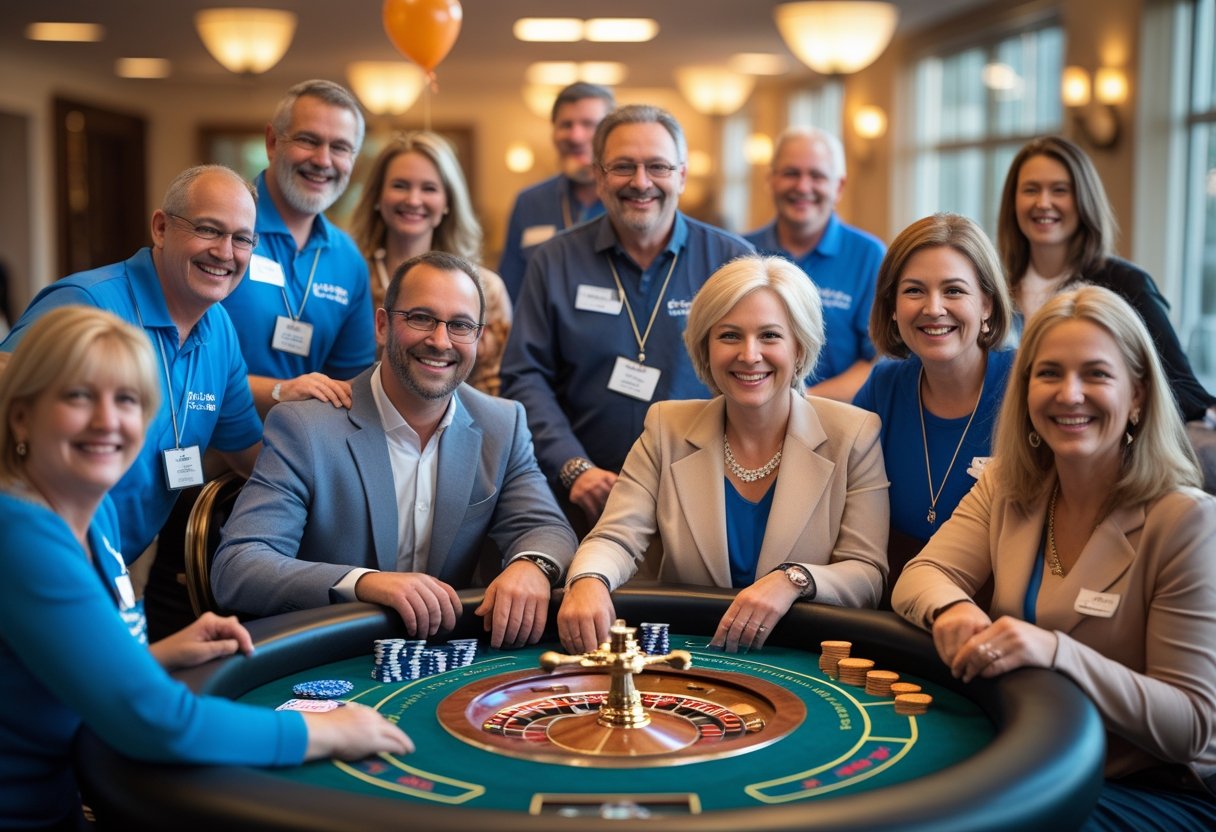
Charity gambling lets nonprofit organizations run games of chance to raise money for their causes. Unlike regular gambling where private companies keep the profits, charitable gaming directs most of the money toward supporting specific missions and programs.
Definition and Core Concepts
Charity gambling is a form of incentivized giving where nonprofits oversee gambling activities instead of casinos or government agencies. You’ll find these organizations running bingo games, raffles, lotteries, and poker nights to fund their charitable work.
The concept works as a fundraising tool that rewards participants while generating revenue. When you buy a lottery ticket or play bingo at a charity event, you get a chance to win prizes while supporting a cause. This approach attracts donors who might not otherwise contribute to traditional fundraising campaigns.
Most charitable gaming operates under strict regulations that vary by location. Organizations must register with state authorities and follow specific rules about how they conduct games and distribute funds. These regulations ensure the money raised actually benefits the intended charitable purposes rather than enriching private individuals.
Charity Gambling Versus Commercial Gambling
The key difference between charitable gaming and commercial gambling lies in where the money goes. Commercial gambling generates profits for private casino owners and shareholders. Charity gambling uses proceeds to support nonprofit missions and community programs.
You’ll notice several operational differences:
- Charities don’t retain private profits from gambling activities
- Regulations typically require at least 20-40% of revenue to go directly to charitable causes
- Prize amounts are often capped at lower levels than commercial gambling
- Political interference is minimal in charity operations
- Overhead costs usually can’t exceed 20% of total revenue
Commercial casinos aim to maximize shareholder returns. Charitable gaming aims to maximize community benefit while keeping operations sustainable.
Purpose and Benefits for Nonprofits
Fundraising events built around games of chance provide nonprofits with reliable, long-term income streams. You get predictable revenue that helps organizations plan programs and budgets more effectively than one-time donations alone.
Charity gambling also expands your donor base. Participants who might never attend a traditional fundraiser will buy raffle tickets or join a poker tournament. This gives you new contacts to add to your database for future fundraising appeals.
The incentivized giving model increases participation rates significantly. People enjoy the entertainment value while feeling good about supporting worthwhile causes. This dual benefit makes charitable gaming an effective tool for organizations serving education, healthcare, animal welfare, and community development.
Types of Charity Gambling Activities
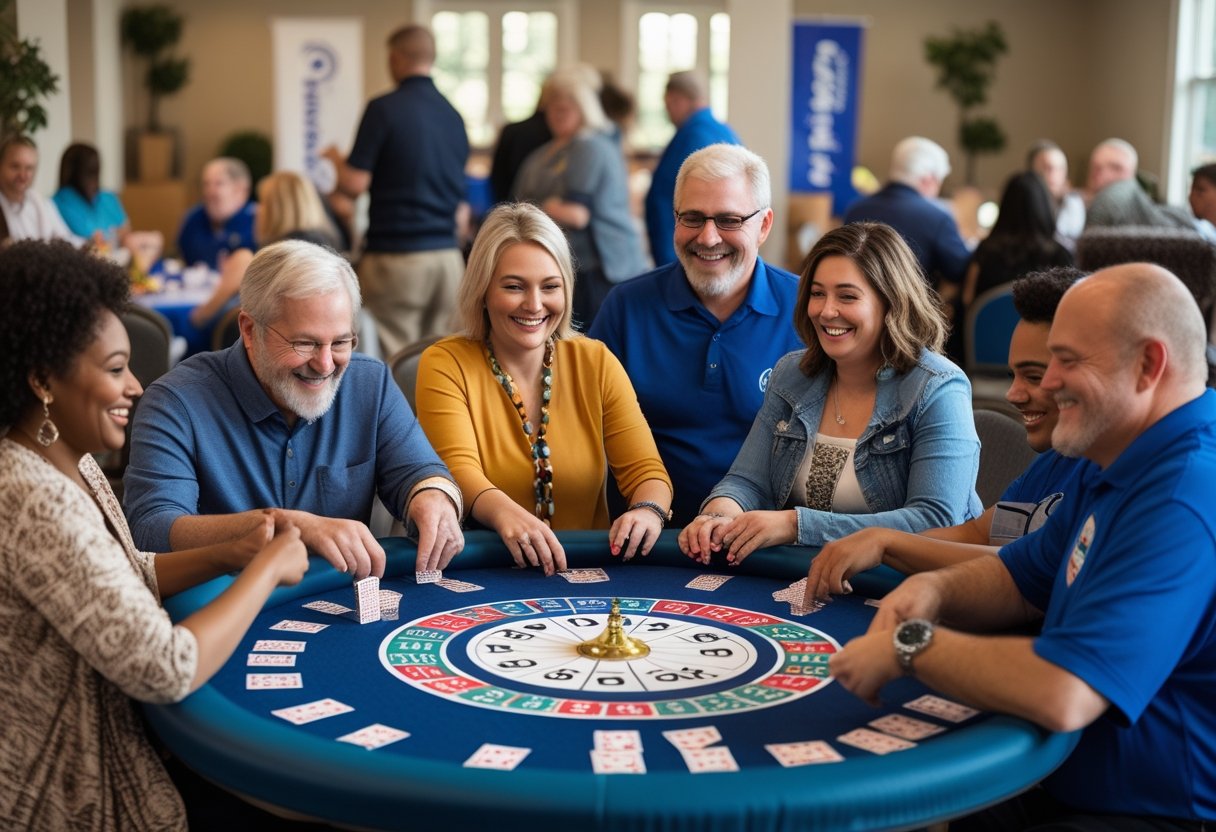
Charity gambling encompasses several distinct gaming formats, from traditional raffles and pull-tabs to casino-style events. Each activity type operates under specific rules and serves different organizational needs.
Raffles and Sweepstakes
Raffles are among the most common charity gambling activities. You purchase numbered tickets, and winners are selected through a random drawing. The prizes can range from small items to large cash awards or valuable goods.
A 50/50 raffle is a popular variation where half the money collected goes to the winner and half supports the charity. You’ll often see these at sporting events and community gatherings. Some raffles offer multiple prize tiers to increase participation.
Sweepstakes differ slightly because you don’t always need to pay to enter. Many jurisdictions require charities to offer a free entry method alongside paid entries. This makes sweepstakes accessible to more participants while still generating revenue for your organization.
Pull-Tabs and Punchboards
Pull-tabs (also called break-opens) are instant-win tickets where you pull back tabs to reveal symbols underneath. If your symbols match the winning combination printed on the ticket, you win a prize immediately. These tickets typically cost between $1 and $5.
Punchboards work similarly but use a physical board with holes covered by paper. You push out a slip of paper from a hole you select, and the number on the slip determines if you win. Both formats provide instant gratification to participants.
Your organization can sell these items at events, bars, or dedicated charity gaming locations where permitted. Many states allow pull-tabs specifically because they generate consistent revenue streams for nonprofits without requiring elaborate event planning.
Poker Tournaments and Casino Nights
Casino nights recreate the casino experience with games like poker, blackjack, roulette, and craps. Participants typically pay an entry fee and receive play chips that have no cash value. You might offer prizes for top chip-earners at the end of the event.
Poker tournaments have become particularly popular fundraising events. Players pay a buy-in fee, and you might allow limited re-buys. The tournament structure creates excitement as players compete for prizes or recognition.
These events require more planning than other charity gambling activities. You’ll need to rent or purchase gaming equipment, hire trained dealers, and secure appropriate venue space. Some states also mandate that certain percentages of game outcomes favor the house less than commercial casinos.
Other Licensed Fundraising Games
Bingo remains one of the oldest and most regulated forms of charity gambling. You call out numbers randomly, and players mark their cards hoping to complete specific patterns. Regular bingo sessions can create dedicated communities of players who return week after week.
Charitable lotteries allow your organization to sell tickets for larger-scale drawings. These operate similarly to state lotteries but on a smaller scale. Some jurisdictions permit paddle wheels, dice games, or sports boards for charity events.
The specific games available to you depend entirely on your state and local regulations. Most require separate licenses for each activity type, and some restrict certain games to specific organization types or limit the frequency of events.
Legal Requirements and Compliance
Charity gambling operates under strict legal frameworks that vary by state and locality. Organizations must navigate registration requirements, obtain proper licenses, follow participant rules, and maintain detailed financial records to stay compliant.
Eligible Organizations and Registrations
Most states limit charity gambling to specific types of nonprofit organizations. You typically need 501(c)(3) status or other recognized tax-exempt classifications to qualify. Some states require your organization to operate for a minimum period before you can conduct gambling activities. Illinois requires five years of operation, while California requires at least one year.
Registration with state authorities is mandatory in most jurisdictions. In Minnesota, you must register with the Minnesota Gambling Control Board before conducting any charitable gaming activities. California requires Form CT-NRP-1 filed with the Attorney General at least 60 days before your event. New York requires registration through the state Gaming Commission if your net proceeds exceed $5,000.
Your organization must also demonstrate that gambling proceeds will support charitable purposes. California mandates that 90% of raffle proceeds benefit charitable causes within the state. You need to maintain your tax-exempt status and follow all state-specific residency or operational requirements to remain eligible.
Licensing and Permits
You need proper licensing before conducting any charity gambling event. Contact your state gaming commission to determine specific permit requirements. In Minnesota, you can reach the Minnesota Gambling Control Board at 651-539-1900 for guidance on Minnesota gambling regulations and licensing procedures.
License requirements vary based on event type and revenue thresholds. New York requires a license if net proceeds exceed $5,000, while some states require permits regardless of revenue amounts. Local jurisdictions may impose additional requirements beyond state regulations. Georgia requires permits from county sheriffs, and many Illinois counties handle licensing at the municipal level.
Application processes typically require detailed event information, including dates, locations, prize descriptions, and projected revenues. You must submit applications within specified timeframes and pay associated fees. Some states allow online ticket sales with prior approval, while others prohibit them entirely. Maintain all licensing documentation and display permits prominently at your events.
Age and Participation Restrictions
Participants in charity gambling must meet minimum age requirements set by state law. Most states require participants to be at least 18 years old, though some set the minimum at 21 for certain gambling activities. You must verify ages and prevent underage participation to maintain compliance.
Your organization should establish clear eligibility rules. Some states restrict who can purchase tickets or claim prizes based on residency or relationship to your organization. Board members and employees may face participation limitations in certain jurisdictions.
Accounting and Reporting Obligations
You must maintain separate accounts for gambling funds and keep detailed financial records. Illinois requires three years of record retention, and most states have similar requirements. Track all ticket sales, expenses, prize distributions, and net proceeds with supporting documentation.
IRS Form 990 Schedule G is required when gross raffle revenue exceeds $15,000. You must report receipts, prize values, and expenses separately from other organizational activities. Issue Form W-2G to winners receiving prizes over $600 that are 300 times the ticket cost. Prizes exceeding $5,000 may require 25% federal tax withholding.
File all required state reports by specified deadlines. California requires Form CT-NRP-2 annually by October 1. Your state gaming commission may require additional periodic reports detailing gambling activities and fund usage. Remember that raffle ticket purchases are not tax-deductible contributions, and you must communicate this clearly to participants.
Taxation and Financial Considerations
Charity gaming activities trigger specific tax obligations that vary based on your organization type and how you conduct the gaming. The IRS treats most gaming as unrelated business income unless specific exceptions apply, and you must also navigate excise taxes, prize reporting requirements, and restrictions on how you use the funds raised.
Unrelated Business Income
Most gaming activities generate unrelated business taxable income (UBTI) for tax-exempt organizations. Gaming is a recreational activity and profit-driven business that doesn’t inherently advance charitable purposes. The IRS doesn’t consider gaming related to your exempt mission just because you use the proceeds for charitable programs.
Several exceptions exist that can exclude gaming from UBTI. The bingo exclusion under IRC Section 513(f) applies if you conduct bingo games that comply with state and local laws. The volunteer labor exception under IRC Section 513(a)(1) applies when volunteers perform substantially all the work. North Dakota has a special exception for most games of chance when conducted legally.
For 501(c)(3) organizations, gaming can never be your primary activity or you risk losing exempt status. For 501(c)(7) social clubs, gaming with members furthers exempt purposes and doesn’t create UBTI, but income from nonmembers does. You must file Form 990-T if your gross unrelated business income exceeds $1,000 in a year.
Gaming Excise Tax and Wagering Taxes
Federal excise taxes apply to certain wagering activities beyond income tax considerations. The IRS imposes a 0.25% excise tax on wagers placed with persons in the business of accepting wagers. You must also pay an annual occupational tax if you’re in the business of accepting wagers.
State and local taxes vary significantly by jurisdiction. Many states impose specific taxes on gaming revenues, licensing fees, or both. Some states require separate accounting for gaming proceeds in dedicated bank accounts.
Prize Reporting and Withholding
You must report gambling winnings on Form W-2G when prizes meet certain thresholds. For bingo and slot machines, you report prizes of $1,200 or more. For keno, the threshold is $1,500. For other games, you report prizes of $600 or more if the amount is at least 300 times the wager.
You must withhold 24% federal income tax from reportable gambling winnings when the prize exceeds $5,000 and is at least 300 times the wager amount. You need the winner’s taxpayer identification number to process withholding correctly. State withholding requirements vary.
Use of Gambling Revenues
You can use gaming proceeds to fund your exempt purpose activities, but restrictions apply based on your organization type. For 501(c)(3) organizations, gaming revenues must support charitable programs. Some states limit how you can spend gross gaming proceeds.
You cannot distribute gaming profits to members or private individuals. Your gaming activities must benefit your organization’s exempt purposes or the broader community. Keep detailed records showing how you use gaming revenues to demonstrate compliance during audits.
Ethical Issues and Operational Risks
Charity gambling creates a challenging situation where nonprofits try to raise money through activities that can harm participants. Organizations face legal complexity, potential reputation damage, and the responsibility to protect players while funding their missions.
Ethical Debates Surrounding Charity Gambling
The main ethical concern is using gambling to fund good causes when gambling itself can lead to addiction and financial harm. This creates a conflict between helping communities and potentially hurting individuals.
Some charities depend heavily on gambling revenue to operate their programs. In certain regions, specific programs like historical preservation receive funding only from lottery dollars. This creates a difficult choice for nonprofits that oppose gambling on moral grounds but need the money.
The rise of electronic bingo and online charitable gaming has made these concerns worse. Traditional paper bingo naturally limited how much people could play. Electronic terminals now allow hundreds of games at once, which increases spending and potential losses.
Research shows that while most people gamble responsibly, the activity harms Canadian society in measurable ways. Many organizations struggle with accepting this reality while depending on gambling funds for their charitable work.
Legal and Regulatory Risks
Gambling laws change by location and are often complex. Many charities have held raffles and fundraising events without realizing they need licenses or permits. Breaking these rules can result in fines, legal penalties, and damage to your organization’s reputation.
Requirements for charitable gaming typically include age restrictions, proper licensing, and detailed record keeping. You must verify participants meet the legal age limit for your jurisdiction. Some areas require identity checks for all gambling activities, both digital and physical.
Different types of charitable gaming face different regulations. Bingo, raffles, and lotteries each have specific rules about how you can operate them. Your organization needs to research local laws before planning any fundraising events that involve chance or wagering.
Best Practices for Transparency
Your organization should maintain detailed records of all charitable gaming activities. Track who participates, how much money comes in, and where the funds go. Make this information available to donors and the public.
Implement harm reduction measures to protect participants:
- Set clear spending limits
- Provide information about gambling risks
- Offer self-exclusion programs
- Train volunteers to recognize problem gambling signs
- Display helpline numbers prominently
Don’t market your fundraising events in ways that encourage excessive play. Avoid messaging that suggests people should gamble to support your cause. Focus on the charitable mission rather than the gaming activity itself.
Create written policies about accepting gambling revenue. Define what types of gaming your organization will conduct and establish oversight procedures. Review these policies regularly with your board and update them as needed.
State and Regional Regulations
Charitable gambling rules change from state to state, with each jurisdiction setting its own licensing requirements, prize limits, and operational standards. Minnesota maintains one of the most structured systems through its dedicated Gambling Control Board, while other states distribute oversight across different agencies or rely on local authorities.
Minnesota Gambling Laws and Oversight
The Minnesota Gambling Control Board regulates all lawful gambling activities in the state. This includes raffles, bingo, pull-tabs, and charitable gaming events run by nonprofit organizations.
You need to contact the Board before starting any charitable gaming operation. They handle licensing applications, enforce compliance standards, and provide guidance on legal requirements. The Board’s phone number is 651-539-1900.
Minnesota gambling laws require organizations to register with the Board and obtain proper permits. Your organization must be a qualified nonprofit with tax-exempt status. The state sets strict rules about how you use gambling proceeds and what percentage must go to charitable purposes.
The Board conducts regular audits and inspections. You must keep detailed records of all ticket sales, prizes awarded, and expenses. Minnesota also limits what types of prizes you can offer and how much individual prizes can be worth.
Regulatory Frameworks in Other States
Each state takes a different approach to charitable gaming oversight. Some states assign responsibility to their Attorney General’s office, while others use lottery commissions or dedicated charitable gaming divisions.
California requires you to register raffles with the Attorney General. Florida handles charitable gaming through specific statutes that define eligible organizations and prize limits. New York uses its Gaming Commission to oversee all charitable gambling activities.
Many states restrict online raffle ticket sales or ban them completely. Prize value caps vary widely. Some states allow only certain types of organizations to conduct raffles, such as religious groups or veterans’ organizations.
You’ll find that most states require advance licensing or permits. Financial reporting requirements differ by jurisdiction. Some states mandate that a minimum percentage of proceeds goes directly to charitable work.
Contacting Gaming Commissions
Gaming commissions serve as your primary resource for compliance information. Each state maintains an official agency website with application forms, fee schedules, and statute references.
You should reach out to your state’s gaming authority before planning any charitable gambling event. Most commissions offer phone consultations to answer specific questions about your planned activities.
Look for your state’s commission through the Attorney General’s office, Department of Revenue, or Secretary of State website. Some states use county-level oversight, which means you’ll need to contact local officials instead of state agencies.
Keep the contact information for your state’s gaming authority readily available. Rules and requirements update regularly, so you should verify current regulations even if you’ve run similar events before.
Frequently Asked Questions
Charitable gambling involves specific legal requirements, licensing procedures, and operational rules that vary by state. Organizations must understand the types of games they can offer, how to obtain proper licensing, and what they can do with the funds they raise.
How does charitable gaming operate and what are its legal requirements?
Charitable gaming requires you to be a registered nonprofit organization. You must provide proof of your nonprofit status through a certificate from your state’s Secretary of State or an IRS 501(c) tax exemption letter.
Your organization needs to apply for a license through your state’s gambling control board. State gambling boards regulate charitable gaming by licensing organizations and gambling managers. They also create rules for conducting gambling activities and regulate equipment distributors.
Only specific types of nonprofits can conduct charitable gambling. Most states allow fraternal, religious, veteran, and other nonprofit organizations to participate. Your organization must be in good standing with both state and federal authorities.
What types of games are typically offered at charity gambling events?
Pull-tabs are one of the most common games at charitable gambling events. These are instant-win tickets where you pull back tabs to reveal symbols or numbers.
Bingo remains a popular choice for many charitable organizations. Raffles allow participants to purchase tickets for a chance to win prizes through a random drawing.
Paddlewheels and tipboards are also approved in several states. Paddlewheels involve spinning a wheel to determine winners, while tipboards are board games where participants select concealed numbers or symbols.
What are the regulations regarding charitable gaming licenses in various states?
Each state maintains its own gambling control board that oversees charitable gaming licenses. You must contact your state’s specific board to understand local requirements and application processes.
Minnesota currently approves five forms of gambling for charitable organizations. The state requires annual registration and detailed record-keeping of all gambling activities.
Some states have stricter regulations than others regarding frequency and prize amounts. You need to check your state’s specific rules about game limits, location restrictions, and reporting requirements. License fees and renewal periods also differ by state.
Can participants legally win monetary prizes at charity gambling events?
Participants can legally win money at licensed charitable gambling events. State laws determine the maximum prize amounts organizations can offer.
Your organization must follow specific rules about how you award and distribute prizes. You need to maintain accurate records of all prizes given out. Some states require you to report large winnings to state authorities.
Prize values and payout percentages are regulated to ensure charitable gambling serves its fundraising purpose. The majority of proceeds must go toward charitable activities rather than prizes.
What are the potential benefits and drawbacks of involving a company in charity gambling activities?
Companies that host charitable gambling can increase foot traffic and customer engagement. Bars, restaurants, and social clubs often benefit from having pull-tab or bingo operations on their premises.
Your organization can access established locations with existing customer bases. This arrangement helps you reach more potential participants without securing your own venue.
However, companies may charge fees for use of their space and facilities. You need to account for these costs in your gambling budget as allowable expenses. Some venues may require exclusive arrangements that limit where else you can conduct gambling activities.
How does charitable gambling contribute to fundraising and what are its limitations?
Charitable gambling raised nearly $150 million for Minnesota nonprofits in a recent year. Organizations use these funds for poverty relief, youth activities, scholarships, and community programs.
You can spend gambling funds on specific allowable expenses and charitable contributions. Allowable expenses include gambling equipment, advertising, and services directly related to conducting gambling. Charitable contributions can go to schools, churches, military service recognition, and organizations serving seniors or people with disabilities.
Your organization faces strict rules about how you spend gambling proceeds. You cannot use funds for general operating expenses or purposes outside approved categories. State gambling boards require detailed financial reporting and regular audits to ensure compliance.
The amount you raise depends on participation levels and operational costs. Equipment purchases, licensing fees, and venue costs reduce your net proceeds. You need dedicated volunteers or staff to manage gambling operations properly.