

Bluffing separates average poker players from winning ones. New players often think bluffing means lying about their cards as much as possible. That approach loses money fast. Good bluffing means betting or raising with a weak hand at the right time against the right opponent to make them fold a better hand. It requires reading the table, understanding board texture, and telling a believable story with your bets.
Most players struggle with two mistakes. They either bluff too much and lose credibility, or they play too scared and never bluff at all. Both approaches cost chips. The key is learning when conditions favor a bluff and when they don’t. Stack sizes matter. The number of opponents matters. Your table image matters.
This guide breaks down the mechanics of successful bluffing. It covers different types of bluffs, how to pick the right spots, and which situations to avoid completely. Readers will learn how to apply pressure at the right moments and how to spot when opponents are bluffing them. Understanding these concepts turns bluffing from a gamble into a calculated weapon.

Understanding Bluffing in Poker
Bluffing forms a core skill in poker that lets players win hands without holding the best cards. This tactic works by making opponents believe a player has a stronger hand than they actually do.
Definition of Bluffing
Bluffing in poker means betting or raising with a weak hand to make opponents fold better hands. A player who bluffs tries to convince others at the table that they hold strong cards when they don’t. This move relies on deception rather than actual hand strength.
The action involves putting chips in the pot to represent power. When opponents believe this representation, they fold their cards and the bluffer wins the pot. A bluff can happen on any betting round from the flop through the river.
Players use different bet sizes to make their bluffs believable. The size should match what they would bet with a real strong hand. This consistency makes it harder for opponents to tell the difference between a bluff and genuine strength.
Purpose and Importance in the Game
Bluffing serves two main purposes in poker. First, it allows players to win pots they would otherwise lose. Second, it makes a player’s betting patterns unpredictable and harder to read.
Players who never bluff become easy targets. Opponents learn to fold whenever these players bet big and only call when they hold strong hands themselves. This predictability costs money over time.
The right amount of bluffing creates balance in a player’s strategy. Too much bluffing leads to frequent calls and lost chips. Too little bluffing means opponents can easily read betting patterns. Players must find the middle ground between these extremes.
Bluffing also protects strong hands by making opponents uncertain. When a player bluffs sometimes, opponents must call more often to avoid being exploited. This means they pay off more when the player actually holds a premium hand.
Types of Bluffs and Their Strategic Uses
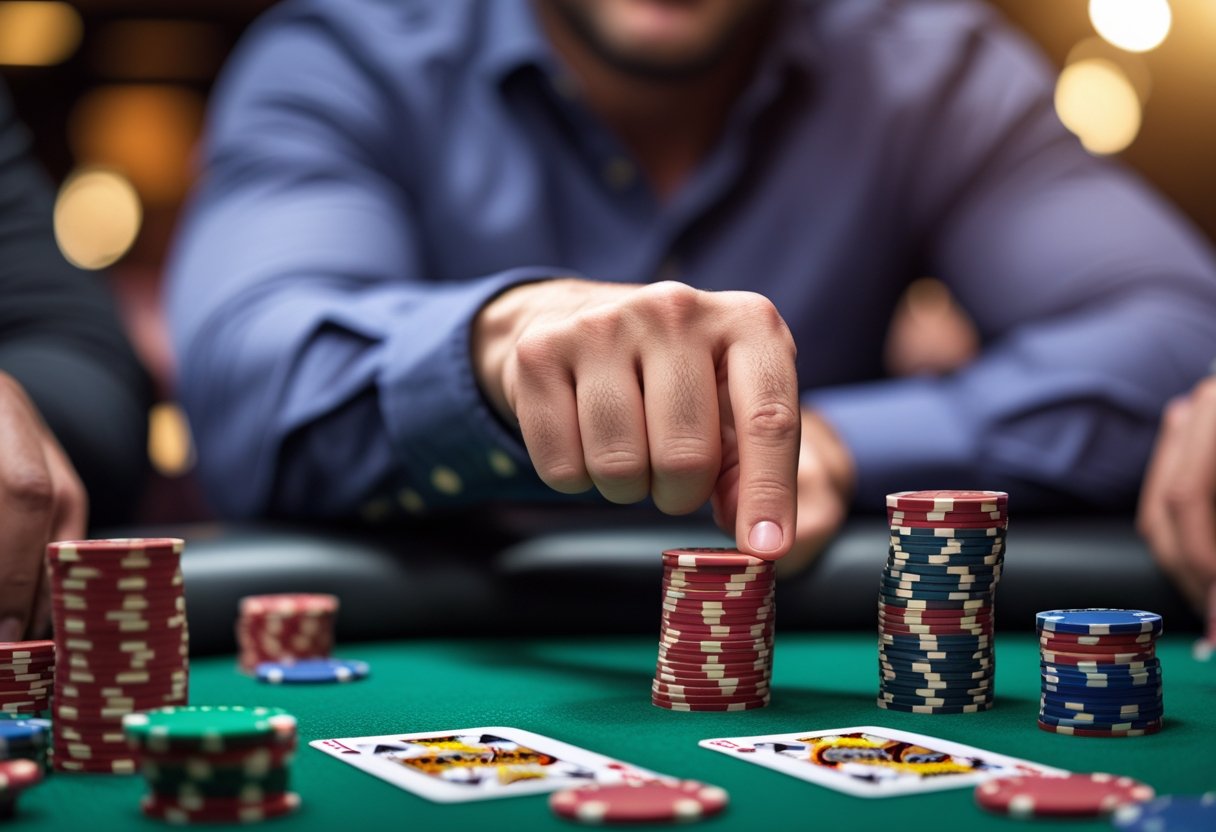
Different bluffing techniques serve distinct purposes at the poker table. Pure bluffs rely on complete deception with weak holdings, stone-cold bluffs target specific situations with zero equity, and opportunistic bluffs capitalize on favorable circumstances when opponents show weakness.
Pure Bluff
A pure bluff occurs when a player bets or raises with a hand that has little to no chance of winning at showdown. The player relies entirely on making opponents fold to win the pot.
This bluff works best against tight players who fold frequently. Players should look for dry boards where strong hands are less likely. The flop and turn present better opportunities than the river because opponents have more chances to fold.
Key characteristics of pure bluffs:
- Zero or minimal equity if called
- Requires strong opponent hand-reading skills
- Most effective in small to medium-sized pots
- Demands consistent betting patterns throughout the hand
Pure bluffs carry significant risk. If an opponent calls, the bluffer has no outs to improve. Players should use this technique selectively and avoid it against loose players who call too frequently. Position matters greatly, as late position provides more information about opponent strength before committing chips.
Stone-Cold Bluff
A stone-cold bluff represents the most aggressive form of bluffing where a player makes a large bet with absolutely nothing. This bluff typically happens on the river with a polarized betting range.
Players execute stone-cold bluffs when they hold complete air but want to represent the strongest possible hand. The board texture must support the story the player tells through their betting. For example, betting big on a four-card flush board when holding no flush makes sense only if previous actions suggested flush draws.
The success rate depends on opponent tendencies and stack sizes. Large bets create maximum fold equity but also risk substantial chips. Players should consider pot odds they’re giving opponents and whether those odds justify a call with marginal hands.
Stone-cold bluffs demand excellent table awareness. Players must recognize when opponents appear weak or show signs of giving up on their hand. This bluff type requires confidence and the ability to maintain composure under pressure.
Opportunistic Bluff
An opportunistic bluff takes advantage of specific table dynamics and opponent weaknesses as they arise. Players don’t plan these bluffs in advance but recognize favorable situations during play.
Common opportunistic situations include opponents checking multiple times, showing hesitation, or displaying physical tells that indicate weakness. Players in late position gain the most from opportunistic bluffs because they act last and gather information from opponents before deciding.
Prime opportunities for this bluff type:
- Opponents check to the aggressor on the turn
- Multiple players show weakness in multiway pots
- Tight players face significant bets
- Stack sizes create uncomfortable calling situations
This bluff requires quick decision-making and adaptability. Players must assess board texture, opponent ranges, and betting patterns within seconds. Small probe bets work well to test opponent strength before committing to larger bluffs on later streets.
The flexibility of opportunistic bluffing makes it valuable for all skill levels. Players don’t need elaborate plans but simply need to recognize when circumstances favor aggression over passive play.
Semi-Bluffing: Balancing Risk and Reward
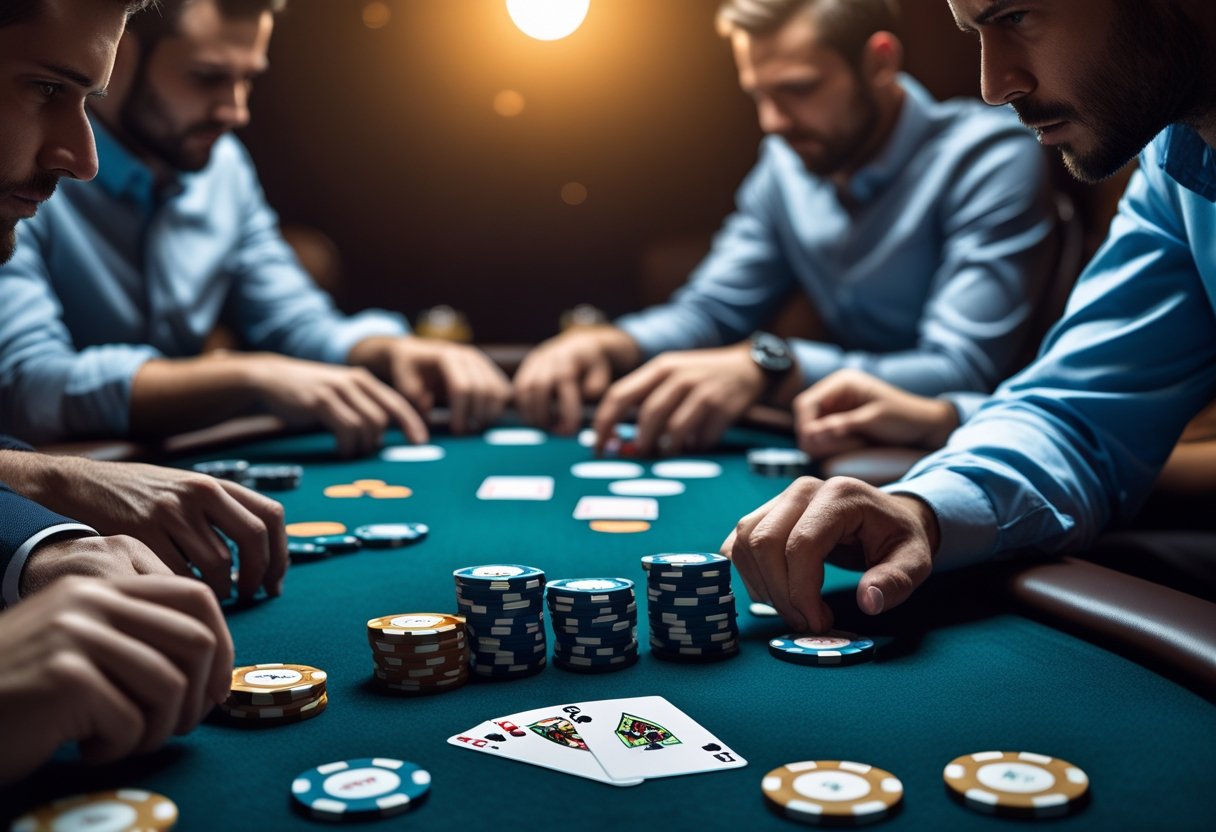
Semi-bluffing sits at the intersection of aggression and calculated risk, giving players a way to win pots immediately while maintaining backup equity if called. This strategy works because it creates two paths to victory instead of relying solely on opponents folding.
What is a Semi-Bluff?
A semi-bluff occurs when a player bets or raises with a hand that is currently behind but has strong potential to improve on future streets. Unlike a pure bluff with no chance of improving, a semi-bluff carries real equity through draws to stronger hands.
Common semi-bluff hands include:
- Flush draws (9 outs to complete)
- Open-ended straight draws (8 outs)
- Combo draws that combine straight and flush possibilities
- Gutshot straight draws (4 outs)
For example, holding J♥ T♣ on a flop of A♠ 9♥ 8♥ creates a strong semi-bluffing opportunity. The hand has an open-ended straight draw and can improve to win the pot even if the opponent calls. The player applies immediate pressure while retaining roughly 32% equity against most hands.
The key difference between semi-bluffing and pure bluffing lies in the safety net. When opponents call a semi-bluff, the player still has legitimate chances to win by hitting their draw on the turn or river.
Key Advantages of Semi-Bluffing
Semi-bluffing offers multiple ways to capture pots compared to checking and hoping to improve. A player who semi-bluffs can win immediately through fold equity or by completing their draw after being called.
The strategy provides three distinct benefits:
- Dual winning paths – Takes down pots through immediate folds or by improving to the best hand
- Disguised strength – Builds bigger pots when draws complete, making it harder for opponents to read hand strength
- Protected equity – Reduces risk compared to pure bluffs since the hand maintains showdown value
Position greatly affects semi-bluffing frequency. Players in position can semi-bluff more liberally because they act last and gather information from opponent actions. Out of position, players need more caution and should focus on stronger draws.
The texture of the board matters significantly. Wet boards with multiple draw possibilities support more aggressive semi-bluffing. Dry boards with limited connectivity require selectivity, often forcing players to use backdoor draws or overcards as semi-bluff candidates.
Critical Factors for Successful Bluffing
A player’s table image and chip stack size directly influence whether a bluff will succeed or fail. These factors determine how opponents perceive bets and whether they have the flexibility to fold strong hands.
Table Image Management
Table image refers to how other players perceive someone’s playing style at the table. A tight player who rarely enters pots can execute bluffs more successfully because opponents believe they hold strong hands. A loose, aggressive player faces more skepticism and gets called more often.
Players should track how often they’ve shown down hands in recent rounds. Someone who has revealed only premium cards builds credibility for future bluffs. Conversely, a player caught bluffing multiple times loses fold equity quickly.
The key is matching bluffing frequency to table image. A conservative image allows for larger, less frequent bluffs. A wild image requires more selective spots with stronger backup equity. Players can intentionally shift their image by showing certain hands or adjusting their bet patterns over time.
Opponents pay attention to consistency. A player who suddenly makes an oversized bet after playing passively triggers suspicion. Bluffs work best when they align with previously established patterns and behaviors at the table.
Chip Stack Considerations
Stack depth affects bluffing strategy in concrete ways. Short stacks under 30 big blinds have limited bluffing options because they can’t apply pressure across multiple betting rounds. Deep stacks above 100 big blinds create more opportunities for multi-street bluffs.
The relationship between stack sizes matters more than absolute amounts. A player with 80 big blinds facing an opponent with 40 big blinds can’t effectively bluff the opponent’s entire stack. The shorter stack limits the maximum pressure available.
Effective stack size determines bet sizing options. Players need enough chips behind to make credible threats on later streets. A river bluff with only 15% of the pot remaining rarely succeeds because opponents get good odds to call.
Larger stacks also provide protection. A failed bluff with 150 big blinds is recoverable. The same mistake with 25 big blinds can eliminate a player from a tournament or seriously damage their cash game session.
Picking the Right Moments to Bluff
Successful bluffing depends on reading the situation correctly and choosing spots where opponents are likely to fold. The best bluffs happen when table position, opponent types, and board conditions all work together to make the story believable.
Ideal Opponents and Table Dynamics
Players should focus their bluffs on tight opponents who fold too often. These players only continue with strong hands and will throw away marginal holdings when faced with aggression.
Avoid bluffing against calling stations who refuse to fold. These players will call down with weak pairs and draws, making bluffs unprofitable.
The number of opponents matters significantly. Bluffing into one player succeeds far more often than bluffing into multiple players. Each additional opponent increases the chance someone has a hand worth calling with.
Player image at the table affects bluffing success. Someone who has shown down weak hands recently will get called more often. A player who has only shown strong hands can bluff more effectively because opponents believe their bets.
Game dynamics also play a role. Loose games with lots of calling require fewer bluffs. Tight games with excessive folding create perfect bluffing conditions.
Table Position and Board Texture
Position gives bluffers a major advantage. Acting last provides information about opponent actions before committing chips. Bluffing from late position succeeds more often because players have already shown weakness by checking.
Bluffing out of position works less often and requires stronger reads. Players must act first on later streets without seeing what opponents will do.
Board texture determines which ranges can credibly bluff. Dry boards like 8♠ 3♦ 3♥ favor smaller bluffs that fold out most hands. Connected boards like J♠ 9♠ 8♥ require larger bets with polarized ranges.
Players should bluff when the board helps their perceived range more than opponents’ ranges. Opening from early position and seeing an ace-high flop creates a natural bluffing spot. The preflop action suggests strong holdings that connect with ace-high boards.
Hand Strength and Equity
The best bluffing hands have some way to improve on later streets. Semi-bluffs with flush draws, straight draws, or overcards give two ways to win. Pure bluffs with no equity rely entirely on opponents folding.
Hand strength matters when selecting which holdings to turn into bluffs. Weak made hands like bottom pair often make poor bluffs. These hands beat other bluffs but lose to calling ranges.
Blockers influence bluffing decisions. Holding cards that remove strong hands from opponent ranges makes bluffs more effective. Having the ace of the flush suit blocks the strongest draws opponents might call with.
Players should avoid bluffing when holding cards that unblock opponent folding ranges. If most hands that would fold contain certain cards, holding those cards yourself reduces fold equity significantly.
Continuation Betting and the C-Bet Bluff
A continuation bet (c-bet) happens when a player raises before the flop and then bets again on the flop, keeping pressure on opponents regardless of whether the flop improved their hand. This move works as both a value bet with strong hands and a bluff with weak ones, making it one of the most common and effective plays in poker.
Continuation Bet Fundamentals
The c-bet builds on pre-flop aggression by maintaining control of the hand after the flop. When a player raises before the flop and gets called, they often have the stronger range of hands. The flop misses most players most of the time, which creates opportunities to win pots without the best hand.
A continuation bet serves three purposes: betting for value with strong hands, bluffing with nothing, or semi-bluffing with drawing hands that could improve. The key is that the pre-flop raiser can credibly represent a strong hand even when they missed the flop completely.
Bet sizing matters for c-bet success. Smaller bets around half the pot risk less but give opponents better odds to call. Larger bets of three-quarters pot or more apply more pressure and generate more folds. Players should match their bet size to their goal and the specific situation.
The position affects c-bet strategy significantly. Players in position (acting last) maintain better control and can gather more information before acting. Out of position, players face more uncertainty about opponent actions and should c-bet more selectively with hands that can withstand pressure on later streets.
Identifying Profitable C-Bet Spots
Board texture determines c-bet profitability more than any other single factor. Dry boards with high cards like A-K-7 or A-Q-5 favor the pre-flop raiser because their range contains more strong hands. Opponents are less likely to connect with these boards and fold more frequently.
Wet boards with connected cards and flush possibilities like 9-8-7 with two suited cards give defenders more ways to continue. Players flop more draws and made hands on these textures, which means they call or raise c-bets more often.
Opponent tendencies reveal the most profitable c-bet opportunities:
- Players who fold to c-bets more than 60% of the time can be bluffed frequently
- Players who fold less than 45% require stronger hands to bet for value
- Tight players out of position fold to c-bets around 67% of the time
- The same players in position only fold 44% of the time
The number of opponents matters. C-bet bluffs work best against a single opponent because only one player needs to fold. Against multiple opponents, the chances that someone connected with the flop increase substantially. A player should c-bet for value more often and bluff less often in multi-way pots.
Semi-bluffing with draws combines immediate fold equity with the potential to improve on later streets. Hands like flush draws or open-ended straight draws make ideal c-bet bluff candidates because they win either by forcing folds or by making strong hands.
When Not to Bluff in Poker
Bluffing at the wrong times costs players more chips than almost any other poker mistake. Players need to recognize situations where bluffing fails more often than it succeeds and save their chips for better opportunities.
Facing Calling Stations
Calling stations are players who call bets frequently and rarely fold their hands. These opponents do not respond to bluffs because they want to see showdowns regardless of pot size or betting action.
Bluffing against calling stations wastes chips. They call with weak pairs, bottom pair, and even ace-high in many situations. Their curiosity to see cards outweighs their ability to fold marginal hands.
Players should identify calling stations by watching how often they reach showdown with weak holdings. These opponents call down with hands that most players would fold on the flop or turn. The best strategy against them involves betting strong hands for value and checking weak hands rather than attempting bluffs.
Recreational players often fall into the calling station category because they play poker for entertainment. They paid to play and want to see cards, making them immune to bluff attempts.
Unfavorable Board Scenarios
Certain board textures make bluffing a poor choice. Boards that connect with many common starting hands give opponents legitimate reasons to continue in the pot.
Low connected boards like 7-8-9 hit many hands that players call pre-flop raises with. Middle cards create straight possibilities and pair combinations that keep opponents interested. Paired boards also present problems because opponents might have trips or fear that the bluffer has them.
Players should avoid bluffing when the board contains multiple broadway cards (ten through ace) after several opponents see the flop. These cards connect with ranges that include top pair, two pair, and straight draws. Rainbow boards with no flush draws and no straight possibilities offer better bluffing opportunities than coordinated boards.
Recent Bluff Exposure
Getting caught bluffing changes table dynamics immediately. Opponents remember recent bluffs and become more likely to call future bets with weaker hands.
Players who just showed a bluff should tighten up and wait before attempting another one. The table watches more carefully and looks for reasons to call. This effect lasts for multiple orbits, not just one or two hands.
Showing multiple bluffs in a short time period creates an image problem that makes value betting more profitable but bluffing nearly impossible. Opponents stop giving credit for strong hands and call with holdings they would normally fold.
Smart players track how recently they bluffed and adjust their strategy accordingly. They wait until the table forgets or new players arrive before attempting another significant bluff.
Frequently Asked Questions
Bluffing in poker raises many questions for players at all skill levels. Success depends on timing, opponent behavior, position at the table, and the ability to maintain a consistent story throughout the hand.
What are the key factors to consider before attempting a bluff in poker?
Players must evaluate their table image before bluffing. Opponents who view a player as tight and conservative will more likely believe their aggressive bets represent strong hands. Players who have been caught bluffing multiple times lose credibility at the table.
Position plays a critical role in bluffing decisions. Late position provides more information about opponents’ actions and allows players to make better-informed choices. Early position bluffs carry more risk because players act without knowing how the rest of the table will respond.
Opponent tendencies significantly impact bluffing success. Tight players fold more easily to aggression and make better bluffing targets. Loose players who call frequently with weak hands should generally be avoided as bluffing targets.
Bet sizing must match the story being told throughout the hand. Small bets into large pots encourage calls, while oversized bets raise suspicion. The bet should align with previous betting patterns and make logical sense based on the board cards.
How can you effectively execute a bluff in a high-stakes poker game?
High-stakes games require bluffs to follow a consistent narrative from start to finish. Players should maintain aggressive betting patterns if they started strong pre-flop. Sudden changes in behavior alert observant opponents to potential weakness.
The bluff must align with what the board suggests is possible. Players can represent strong hands like straights or flushes when the board shows connected cards or suited cards. The story becomes more believable when the board supports the hand being represented.
Timing matters significantly in high-stakes situations. Players should choose moments when opponents show weakness or when scare cards appear on the turn or river. These opportunities make bluffs more credible and increase fold rates.
Body language control becomes essential in live high-stakes games. Players must avoid nervous tells like touching their face or leaning back from the table. Maintaining steady breathing and consistent posture helps sell the bluff.
In what situations is bluffing most likely to succeed?
Bluffs work best when the board presents scary possibilities that could have improved the bluffer’s hand. Flush cards or straight cards on the turn or river create opportunities to represent strong holdings. Tight opponents facing these boards often fold marginal hands.
Heads-up situations offer better bluffing opportunities than multi-way pots. Fewer opponents mean fewer chances someone actually hit a strong hand. Continuation bets after raising pre-flop work particularly well in heads-up scenarios.
Players who have shown strength throughout the hand can bluff more successfully on later streets. Building the pot with aggressive betting early makes a large river bet seem like a natural continuation. Opponents find it harder to put these players on bluffs.
Short-stacked opponents near elimination in tournaments make poor bluffing targets. These players often commit their chips with any reasonable hand. Medium to deep-stacked opponents have more to lose and fold more readily.
What are common tells that may indicate an opponent is bluffing?
Physical discomfort often signals a bluff in live games. Players may touch their nose, ears, or neck when nervous about their weak hand. Leaning back from the table can indicate an attempt to appear relaxed while feeling pressure.
Inconsistent bet sizing raises red flags about possible bluffs. A player who suddenly makes an unusually large or small bet may lack confidence in their hand. The bet doesn’t fit the pattern established earlier in the hand.
Rapid or forced speech sometimes indicates deception. Players trying too hard to justify their bet or appear casual may be covering up a weak holding. Genuine confidence typically comes across as natural and unhurried.
Trembling hands usually signal excitement rather than nervousness. This tell often indicates a strong hand instead of a bluff. Players should avoid misreading this behavior as weakness.
Timing tells provide valuable information online and in live games. Instant calls or raises often indicate strong hands, while long pauses followed by bets may suggest uncertainty. Players considering a bluff typically take more time to decide.
How can one balance bluffing and solid play to optimize their poker strategy?
Players should bluff selectively rather than frequently. Too many bluffs make opponents call more often and reduce bluffing effectiveness. Maintaining unpredictability requires mixing strong hands with occasional well-timed bluffs.
The ratio of value bets to bluffs should favor value betting. Most profits come from betting strong hands rather than bluffing with weak ones. A general guideline involves bluffing less than 30% of the time in most situations.
Table image management requires alternating between aggressive and conservative play. Switching styles throughout a session keeps opponents guessing about hand strength. Players who only play premium hands become too predictable.
Position should dictate bluffing frequency. More bluffs can happen from late position where information is available. Early position play should focus primarily on strong holdings with minimal bluffing.
Bankroll considerations affect bluffing strategy. Players should bluff more conservatively when playing above their comfortable stakes. Lower-stakes games allow for more experimentation with different bluffing approaches.
Which psychological aspects of poker should be understood to bluff more effectively?
Reading opponent behavior patterns improves bluffing success rates. Players who fold often to aggression can be bluffed more frequently. Those who call down with weak hands require stronger actual holdings.
Exploiting fear gives bluffs more power. Opponents protecting their chip stacks or afraid of elimination fold more readily. Tournament situations near the bubble create particular vulnerability to aggressive bluffing.
Understanding ego and pride helps identify calling tendencies. Some players refuse to be bluffed and call with marginal hands to “keep opponents honest.” These players make poor bluffing targets but good value betting targets.
Recognizing tilt in opponents creates bluffing opportunities. Players who just lost a big pot often make emotional decisions. They may call bluffs out of frustration or fold strong hands out of fear.
Controlling one’s own emotions remains crucial for effective bluffing. Staying calm after failed bluffs prevents giving away information about frustration. Maintaining the same demeanor regardless of hand strength makes bluffs harder to detect.