

Playing online poker for real money requires more than just skill at the table. Players need to know how to safely move their funds in and out of poker sites. Understanding secure deposit and withdrawal methods protects your bankroll and ensures you can access your winnings without issues.
The best online poker sites offer multiple banking options that keep your money and personal information safe. These include bank transfers, e-wallets, and cryptocurrencies, each with different processing times and security features. Most sites require a minimum deposit of $10 to get started.
This guide covers everything players need to know about managing money at online poker sites. It explains how to pick trustworthy platforms, which payment methods work best, and how to handle your funds smartly while playing.

Choosing Safe Online Real Money Poker Sites
Finding a secure poker site requires checking specific safety features, proper licensing, and strong data protection systems.
Key Criteria for Trustworthy Poker Platforms
Safe online poker sites share several important features that protect players. Sites like Bovada and BetOnline use Random Number Generator (RNG) technology to ensure fair card dealing. These poker rooms also employ anti-collusion systems that detect and prevent cheating at tables.
Reliable customer support matters when playing real money poker. The best poker sites offer 24/7 live chat and email support to address account issues or payment questions. Players should look for sites with quick response times, typically under five minutes for live chat.
Banking options reveal a lot about a poker site’s trustworthiness. Legitimate poker rooms accept multiple payment methods, including credit cards, cryptocurrencies, and bank transfers. Black Chip Poker and 888poker process cryptocurrency withdrawals within 48 hours, while traditional methods like bank wires take 5-15 business days.
Player reviews on sites like Trustpilot or poker forums provide real feedback about withdrawal speeds and game fairness.
Licensing and Regulation in Online Poker
Licensed poker sites follow strict rules to protect players. States like New Jersey, Pennsylvania, and Michigan regulate online poker sites within their borders. Sites operating in these states must meet government standards for fair play and secure transactions.
Offshore poker sites like BetOnline operate under international licenses from places like Panama or Curacao. These sites serve players in states without regulated online poker. While these licenses offer some oversight, they provide less protection than US state licenses.
Licensed poker rooms must keep player funds separate from operating costs. This rule protects player balances if the site faces financial problems. Players should verify a site’s license by checking the footer of the website or contacting customer support.
SSL Encryption and Player Protection
SSL encryption protects data between a player’s device and the poker site’s servers. All safe online poker sites use 128-bit or 256-bit SSL encryption, the same technology banks use. This prevents hackers from stealing login details, credit card numbers, or personal information.
Players can verify SSL protection by looking for a padlock icon in their browser’s address bar. Sites like Bovada and BetOnline display security certificates that prove their encryption is active and current.
Blockchain technology adds another layer of security for cryptocurrency users. Bitcoin and other crypto deposits create permanent transaction records that cannot be altered. This makes crypto one of the most secure banking methods for poker sites. Some poker rooms also use VPN technology and firewalls to protect internal systems from cyber attacks.

Depositing Funds Securely
Players need reliable payment options that protect their money and personal information when funding poker accounts. Most poker sites accept multiple banking methods, including traditional cards, electronic wallets, and modern cryptocurrency options.
Accepted Payment Methods for Deposits
Online poker sites typically offer 5-10 different payment methods to accommodate players from various regions. The most common options include credit cards, debit cards, e-wallet services, bank transfers, and prepaid vouchers.
Credit cards like Visa and Mastercard remain popular despite requiring players to share card details with payment processors. Many sites also accept Discover cards for US players.
E-wallets provide an alternative for players who prefer not to share banking information directly. Popular choices include PayPal, Skrill, and Neteller. These services act as intermediaries between bank accounts and poker sites.
Minimum deposit requirements usually start at $10 across most platforms. Some sites offer a deposit match bonus or deposit bonus for first-time users, often ranging from 50% to 100% of the initial deposit amount. Players should verify which payment methods qualify for bonus offers, as some banking methods receive additional incentives of 10-15%.
Using Visa and Debit Cards for Poker
Visa cards work at nearly all regulated poker sites and process deposits instantly. Players enter their card number, expiration date, CVV code, and billing address to complete transactions.
Debit cards function similarly to credit cards but draw funds directly from checking accounts. This helps players manage bankrolls more responsibly since they cannot spend beyond available balances.
Card deposits face occasional declines due to bank restrictions on gambling transactions. When this happens, players should contact their card issuer or try an alternative payment method. Some banks flag online poker deposits as high-risk and automatically reject them.
Security measures for card transactions include SSL encryption and PCI compliance standards. Reputable sites never store complete card numbers in their databases. Players can verify security by checking for padlock icons in browser address bars during payment processing.
Bank Transfers and E-Wallet Solutions
Bank transfers allow players to move funds directly from checking accounts to poker sites without intermediaries. This method works well for larger deposits but typically takes 3-5 business days to process. Fees range from free to $25 depending on the poker room and banking institution.
E-wallets like PayPal, Skrill, and Neteller offer faster alternatives to traditional bank transfers. Players create accounts with these services, load funds using various methods, then transfer money to poker sites within minutes. CoinPoker and similar platforms also accept cryptocurrency deposits through specialized e-wallet systems.
The main advantage of e-wallets is privacy. Players avoid sharing bank details with multiple poker sites by using a single e-wallet account. Most e-wallet deposits complete instantly and carry minimal fees of 0-2.5%. However, PayPal remains limited at many poker sites due to regional restrictions and company policies.
E-wallet withdrawals typically return to the same account used for deposits. Players should verify their e-wallet accounts before making first deposits to avoid processing delays.
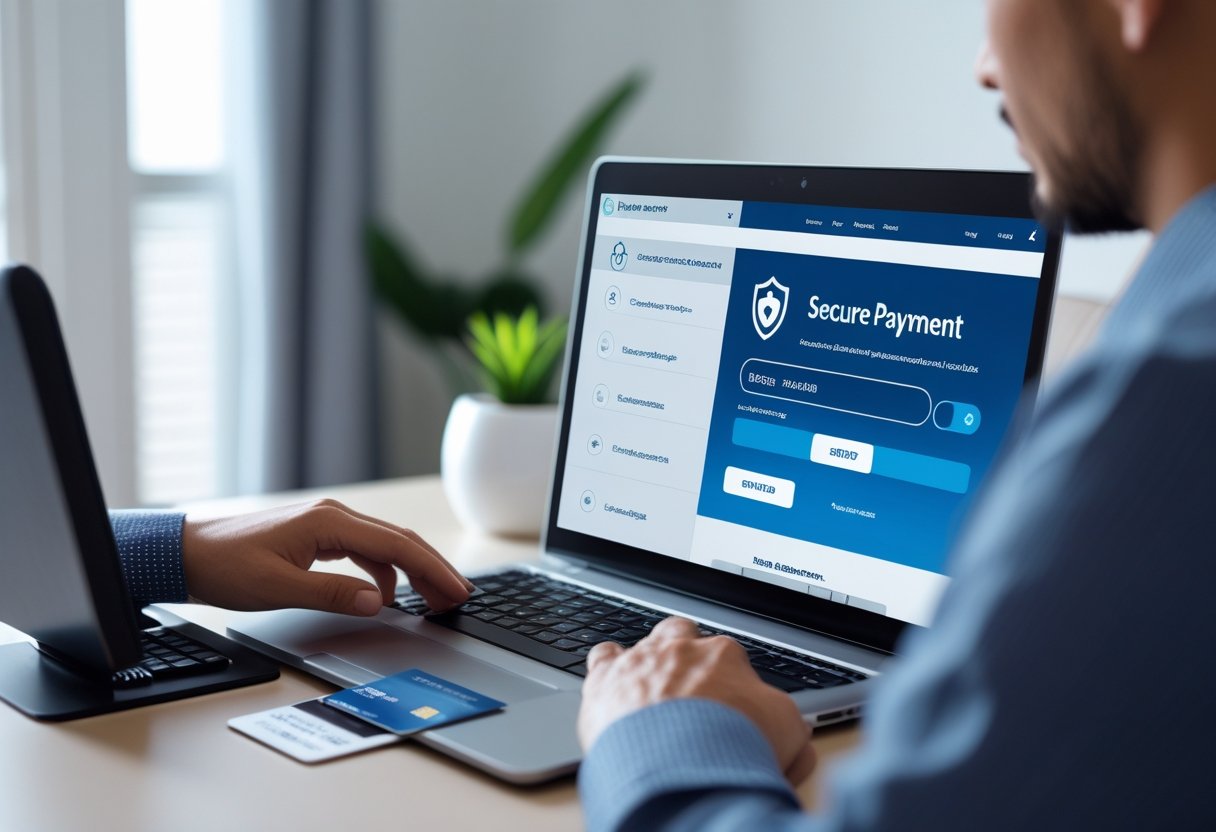
Withdrawing Your Winnings Safely
Getting money out of an online poker account requires understanding withdrawal processes, choosing the right payment method, and knowing what to expect for processing times. Players need to verify their accounts and select banking methods that balance speed with security.
Withdrawal Processes Explained
Most poker sites require account verification before processing the first withdrawal. Players must submit identification documents like a driver’s license or passport and proof of address such as a utility bill. This verification protects both the player’s bankroll and the site from fraud.
The withdrawal process starts in the cashier section of the poker site. Players select their preferred banking method and enter the amount they want to withdraw. The site may require withdrawals to use the same method as deposits for security reasons.
Sites typically process withdrawal requests within 24 to 48 hours during business days. Some platforms offer instant withdrawals for certain payment methods. Players should check if their site charges withdrawal fees, as these can reduce the amount received.
Fastest Withdrawal Methods
E-wallets like PayPal, Skrill, and Neteller offer the quickest withdrawal times. These payment methods usually process within 24 hours once the poker site approves the request. Cash players who need frequent access to their funds often prefer e-wallets.
Cryptocurrency withdrawals have become popular for their speed and low fees. Bitcoin and other digital currencies can process in hours rather than days. Bank transfers and checks take the longest, often requiring 3 to 7 business days.
Debit cards fall in the middle, typically processing within 2 to 5 business days. Players should note that withdrawal speeds depend on both the poker site and the banking method chosen.
Withdrawal Limits and Processing Times
Poker sites set minimum and maximum withdrawal amounts. Most platforms require a minimum withdrawal of $10 to $20. Maximum limits vary widely, from $2,000 per transaction at smaller sites to $10,000 or more at established platforms.
High-stakes players may need to arrange special withdrawals for larger amounts. Sites often increase limits for VIP members or long-term players. Processing times include both the site’s approval period and the banking method’s transfer time.
Players can speed up withdrawals by completing verification early and maintaining accurate account information. Some sites offer priority processing for higher-tier members, reducing wait times to just a few hours.
Types of Online Real Money Poker Games
Real money poker sites offer three main categories of play that cater to different preferences and bankrolls. Players can choose between ongoing cash games with flexible entry and exit points, structured tournaments with guaranteed prize pools, or specialty variants that add new rules to traditional poker formats.
Cash Games and Table Options
Cash games let players sit down and leave whenever they want. Each chip represents actual money, and players can buy in for different amounts depending on the table stakes. Most sites offer No Limit Texas Hold’em as their primary game, with blinds ranging from $0.01/$0.02 for beginners up to $10/$20 or higher for experienced players.
Pot Limit Omaha is the second most popular cash game option. Players receive four hole cards instead of two and must use exactly two of them to make their final hand. The betting is capped at the current pot size, which creates more action than traditional limit games but less variance than no limit formats.
Many poker rooms feature six-handed tables, full ring games with nine players, and heads-up options. Some sites offer fast-fold variants where players immediately move to a new table after folding. Several platforms include bad beat jackpot tables where players win extra money when a strong hand loses to an even stronger one.
Popular Online Poker Tournaments
Tournaments require a one-time buy-in and give all players the same starting chip stack. Players compete until one person holds all the chips, with payouts distributed to the top finishers based on a preset structure. Buy-ins range from free entry up to thousands of dollars for major events.
Guaranteed prize pools protect players by ensuring minimum payouts regardless of how many people register. Sunday majors typically guarantee $100,000 or more at regulated US sites. Multi-table tournaments can last several hours, while turbo and hyper-turbo formats speed up play with faster blind increases.
Sit and go tournaments start as soon as enough players register, usually six or nine people. Progressive knockout tournaments add bounties to each player, rewarding aggressive play when someone eliminates an opponent.
Specialty Poker Variants
Beyond Hold’em and Omaha, poker sites offer games that change the traditional rules. Seven Card Stud deals cards face up and face down over multiple betting rounds without community cards. Razz uses the same structure but awards the pot to the lowest hand instead of the highest.
Mixed games rotate through different poker variants every few hands or orbits. HORSE combines Hold’em, Omaha Hi-Lo, Razz, Stud, and Eight-or-Better in one session. 8-Game adds No Limit Hold’em, Pot Limit Omaha, and 2-7 Triple Draw to that rotation.
Some platforms feature Chinese Poker and Open Face Chinese Poker as alternatives to traditional betting structures. These games use point scoring instead of pots and chips.
Online Poker Bonuses and Promotions
Online poker sites use bonuses and promotions to attract new players and keep existing ones engaged. These offers include deposit matches, rakeback programs, and various loyalty rewards that add value to real money play.
Welcome Bonuses and Deposit Incentives
Welcome bonuses are the most common type of poker bonus offered to new players. A deposit match bonus typically ranges from 50% to 200% of the first deposit, with maximum amounts between $500 and $2,000.
Most poker sites require players to earn the bonus through actual play rather than receiving it immediately. Players pay rake in cash games or tournament fees, which gradually releases portions of the bonus into their account. The bonus release period usually lasts 30 to 90 days.
Some sites offer additional perks with their poker welcome bonus, such as:
- Free tournament tickets
- Satellite entry passes
- No-deposit bonus cash
- Extra rakeback during the first month
The best deposit bonus offers provide realistic clearing requirements that match a player’s typical volume. Sites like CoinPoker offer up to 150% match bonuses, while BetOnline includes tournament tickets alongside their 100% match up to $1,000.
Rakeback and Loyalty Rewards
Rakeback returns a percentage of the rake paid by players back to their accounts. Most poker sites offer between 10% and 65% rakeback, either automatically or through loyalty programs.
Poker rakeback can be paid in different ways. Some sites deposit it weekly, while others credit accounts daily. CoinPoker provides 33% rakeback every Monday. Other platforms use points-based systems where players earn rewards they can exchange for cash or tournament entries.
Loyalty programs reward consistent play over time. Players move through tiers by accumulating points, unlocking higher rakeback percentages and exclusive benefits. These programs often include access to special freeroll tournaments and enhanced promotions.
Terms and Conditions for Poker Bonuses
Every poker bonus comes with specific requirements players must meet before withdrawing funds. The wagering requirement determines how much rake a player needs to generate to clear the bonus fully.
Common restrictions include:
- Time limits: Most bonuses expire after 30-90 days
- Game restrictions: Some bonuses only clear through specific poker variants
- Minimum deposits: Welcome bonuses typically require $10-$50 minimum deposits
- Withdrawal rules: Players may need to wager their deposit amount once before cashing out
Clearing rates vary by game type. Cash games usually release bonuses faster than tournaments. Sites calculate bonus clearing based on contributed rake or dealt rake methods, which affects how quickly players earn their full bonus amount.
Advanced Online Poker Room Features
Modern poker rooms include features that go beyond basic gameplay, with mobile apps that work on phones and tablets, privacy options for players who want to stay anonymous, and support teams available through multiple channels.
Mobile Poker App Capabilities
Mobile poker apps let players join cash games and tournaments from smartphones and tablets. These apps support both iOS and Android devices with downloads available through app stores or direct from poker sites.
The apps include all main game types like Texas Hold’em, Omaha, and Stud. Players can make deposits, request withdrawals, and manage their accounts without switching to a desktop computer.
Key mobile features include:
- Quick-fold poker for faster gameplay
- Multi-table support on larger screens
- Touch controls for betting and table actions
- Portrait and landscape viewing modes
- Push notifications for tournament updates
Most apps require at least 100MB of storage space and a stable internet connection. Players can switch between mobile and desktop while staying logged into the same account with synchronized balances.
Anonymous Play and Security Benefits
Anonymous poker tables hide player usernames and replace them with generic identifiers like “Player 1” or “Player 2.” This system prevents opponents from tracking playing styles or using database software to gain advantages.
Anonymous play protects recreational players from professional players who rely on opponent data. It creates a level playing field where each hand matters more than historical patterns.
Some poker rooms offer full anonymity across all tables, while others create specific anonymous zones. Players cannot request seat changes to follow specific opponents, and lobby information stays hidden.
The security benefits extend to preventing collusion since players cannot identify their partners at tables. This feature works alongside encryption protocols that protect financial transactions and personal information.
Customer Support for Players
Customer support teams help players resolve deposit issues, verify accounts, and answer questions about game rules. Most poker rooms offer support through live chat, email, and phone lines with response times ranging from immediate to 24 hours.
Live chat provides the fastest help for urgent problems like frozen accounts or failed deposits. Support agents can access account details in real-time and process requests while players wait. Email works better for complex questions that need detailed explanations or documentation.
Support channels typically include:
- 24/7 live chat with instant responses
- Email support with ticket tracking
- Phone support in multiple languages
- Help center with FAQs and guides
Players should check support availability before choosing a poker room since some sites only offer limited hours or exclude certain languages. The best rooms provide multilingual support and maintain separate teams for technical issues versus payment questions.
Managing Your Bankroll and Poker Strategy
A player’s success at online poker depends on smart money management and continuous skill development. Keeping a separate poker bankroll, setting strict spending limits, and regularly working on strategy helps players stay in the game longer and increases their chances of long-term profitability.
Setting Limits and Avoiding Overspending
A poker bankroll should be money set aside exclusively for playing poker, completely separate from personal finances and living expenses. This separation helps players make better decisions without the stress of risking money needed for rent, bills, or daily life.
Most experienced players recommend not risking more than 5% of a bankroll in a single session. The recommended number of buy-ins varies by game format:
- Cash Games: 30 to 50 buy-ins
- Multi-Table Tournaments (MTTs): 100 buy-ins
- Standard Spin & Go: 100 buy-ins
- Fast-Paced Spins: 150 to 300 buy-ins
Players should never spend more than 1-2% of their bankroll on a single tournament entry. These guidelines protect against variance, which is the natural ups and downs that occur in poker regardless of skill level.
Taking breaks during losing streaks prevents tilt, which leads to poor decisions and overspending. Players who feel frustrated or emotional should step away from the tables until they regain a clear mindset.
Improving Your Game Online
Online poker provides unique opportunities to develop skills faster than live play. Players can review hand histories after each session to identify mistakes and missed opportunities. Most poker sites offer downloadable hand histories that show every decision made during play.
Tracking software helps players analyze their performance over thousands of hands. These programs reveal patterns in playing style, such as playing too many weak hands or folding too often in certain positions.
Many successful players study poker strategy content regularly. Training sites, strategy forums, and instructional videos cover topics from basic concepts to advanced techniques. Starting with fundamental concepts like position, pot odds, and hand selection builds a solid foundation.
Playing multiple tables at once, known as multi-tabling, requires practice but helps players see more hands per hour. Beginners should start with one or two tables and gradually add more as they become comfortable with the online interface.
Moving Between Online Poker Stakes
Players should consider moving up in stakes only when they have 50% more buy-ins than the recommended minimum for their chosen format. This cushion provides protection against variance when facing tougher competition at higher stakes.
Consistent winning over a large sample size indicates readiness to move up. A player needs to feel psychologically comfortable with the higher amounts at risk before making the jump.
Taking a “shot” at higher stakes means playing temporarily at a higher level in a controlled way. Players might set a limit of 3-5 buy-ins for a shot, returning to their regular stakes if they lose that amount.
Moving down in stakes protects a bankroll during losing periods. This decision represents smart bankroll management rather than failure. Lower stakes allow players to rebuild confidence, stabilize results, and properly analyze what went wrong at the higher level.
Players should drop down when their bankroll falls below the recommended minimum for their current stakes. Staying at stakes that are too high for a bankroll creates pressure that leads to poor decisions.
Comparing the Best Online Poker Sites
Players need to evaluate multiple factors when choosing where to play poker online. Site traffic, platform reputation, and available games all impact the quality of the playing experience.
Top-Rated Real Money Poker Platforms
PokerStars remains the largest poker site worldwide with the most active player base. The platform offers cash games and tournaments at all stake levels.
888 Poker provides a user-friendly interface suited for newer players. The site includes both browser-based play and downloadable software options.
Party Poker attracts players with regular tournament series and competitive cash game action. The platform supports multiple currencies and payment methods.
Each of these poker websites maintains proper licensing and uses encryption to protect player funds. They also use Random Number Generators for fair card dealing. Players should verify that any site they consider holds valid gaming licenses from recognized authorities.
Evaluating Online Poker Traffic
Online poker traffic determines how quickly players find games at their preferred stakes. High traffic sites fill tables faster and offer more game variety throughout the day.
Peak traffic hours occur between 7 PM and midnight EST on most platforms. During these times, major sites host thousands of simultaneous cash game players. Tournament traffic spikes on weekends when large guaranteed prize pool events run.
Lower traffic sites may struggle to spread games at higher stakes or less popular variants like Omaha Hi-Lo. Players who prefer niche games or high-stakes action benefit from choosing top online poker sites with established player bases.
Traffic also affects tournament structures. Sites with strong poker traffic can guarantee larger prize pools and run events more frequently without cancellations.
Selecting the Ideal Poker Website
Players should match their needs to what each platform offers. Cash game players need sites with consistent traffic at their stake levels. Tournament players want platforms with varied buy-ins and structure options.
The sign up process should be straightforward and require basic identity verification. Most sites complete account approval within 24-48 hours.
Banking options matter significantly. The best online poker sites support multiple deposit methods including credit cards, e-wallets, and bank transfers. Withdrawal processing times range from 24 hours to 5 business days depending on the method chosen.
Software quality affects the playing experience. Some players prefer downloadable clients for stability while others want instant browser access. Mobile compatibility lets players join games from smartphones or tablets.
Frequently Asked Questions
Players often have questions about protecting their money and choosing safe platforms when playing poker online. Understanding deposit methods, withdrawal options, and security features helps players make informed decisions.
How do I make safe deposits for online real money poker?
Players should choose licensed and regulated poker sites that display certifications from authorities like the Malta Gaming Authority or UK Gambling Commission. These sites follow strict security standards to protect player funds.
Trusted payment methods include credit cards, e-wallets like PayPal and Skrill, and direct bank transfers. Players should avoid unknown or unverified payment processors.
The site should use SSL encryption to protect financial data during transactions. Players can verify this by looking for a padlock icon in the browser address bar.
What options are available for withdrawing winnings in online poker?
Most poker sites offer e-wallets, bank transfers, and checks for withdrawals. E-wallets like Neteller and Skrill typically process fastest, often within 24-48 hours.
Bank transfers take longer, usually 3-5 business days. Some sites may charge fees for certain withdrawal methods.
Players must verify their identity before making their first withdrawal. This requires submitting a government-issued ID and proof of address.
Are there any legal restrictions on playing poker online for real money in the USA?
Online poker legality varies by state in the USA. Nevada, New Jersey, Pennsylvania, Michigan, Delaware, and West Virginia allow regulated online poker.
Players must be physically located within a legal state to play. Sites use geolocation technology to verify player locations.
Federal law does not prohibit players from participating in online poker. However, players should only use sites licensed in their state.
Which online poker platforms offer the best security for my financial transactions?
Licensed platforms with certifications from gaming authorities provide the strongest security. These sites undergo regular audits of their banking systems.
Top platforms use 256-bit SSL encryption and segregate player funds from operating expenses. They also offer two-factor authentication for account access.
Reputable sites display their licensing information clearly on their homepage. Players should verify this information with the licensing authority’s website.
Can I play online poker for real money without making a deposit?
Some poker sites offer no-deposit bonuses to new players. These bonuses provide small amounts of real money to play without requiring an initial deposit.
Players can build a bankroll using these bonuses and tournament entries. However, withdrawal requirements typically apply before players can cash out winnings.
Freeroll tournaments provide another option to win real money without deposits. These free-entry tournaments offer real cash prizes to winners.
What are the indicators of a trustworthy online poker site?
A trustworthy site displays valid licensing from recognized gaming authorities. The site should clearly state its terms and conditions for deposits and withdrawals.
Positive player reviews and a long operating history indicate reliability. Sites should have responsive customer support available through multiple channels.
The platform should publish its payout percentages and undergo regular third-party audits. Trustworthy sites also provide responsible gambling tools and resources.