

Planning a family trip to a casino resort and wondering if your kids can come along? Many casino resorts offer hotels, restaurants, shows, and other attractions that welcome families. However, the gaming floor itself is off-limits to anyone under 21 in most U.S. casinos.

Kids are generally not allowed on casino gaming floors, but they can access non-gaming areas like hotels, restaurants, shops, and entertainment venues within the same resort. When minors need to walk through a casino to reach these areas, they must stay with an adult and move directly through without stopping.
Understanding these rules before you visit helps you plan a trip that works for your whole family. Age requirements, passing-through policies, and penalties for violations vary by location, so knowing what to expect keeps everyone safe and avoids problems during your stay.
Minimum Gambling Age in Casinos

Most U.S. casinos require visitors to be 21 years old to gamble, though some locations allow 18-year-olds to participate in gaming activities.
Legal Gambling Age by Jurisdiction
The minimum gambling age in most commercial casinos across the United States is 21 years old. This standard aligns with the legal drinking age since casinos typically serve alcohol throughout their gaming floors.
You must be 21 to play slot machines, table games, and sports betting in most states. This age requirement applies whether you’re visiting casinos in Nevada, Pennsylvania, or most other states with commercial gaming.
However, some states set the legal gambling age at 18 for certain types of gaming. You can participate in bingo, lottery games, and horse racing at 18 in several states. The specific age depends on both your state and the type of gambling activity you want to try.
States enforce these age restrictions strictly. If you’re caught gambling underage, you face fines between $500 and $1,000, possible suspension of your driver’s license, and a criminal record.
Exceptions in Tribal and Cruise Ship Casinos
Tribal casinos operate under different rules than commercial casinos. Many tribal gaming facilities set their minimum gambling age at 18, even in states where commercial casinos require visitors to be 21.
These tribal casinos follow their own regulatory framework. You’ll find 18-year-old minimums at various tribal properties in California, Michigan, and other states with Native American gaming operations.
Cruise ship casinos also differ from land-based venues. Some cruise casinos departing from states like Georgia and South Carolina allow 18-year-olds to gamble once the ship reaches international waters. You should verify the specific age requirements with your cruise line before booking.
Casino Floor Policies for Minors
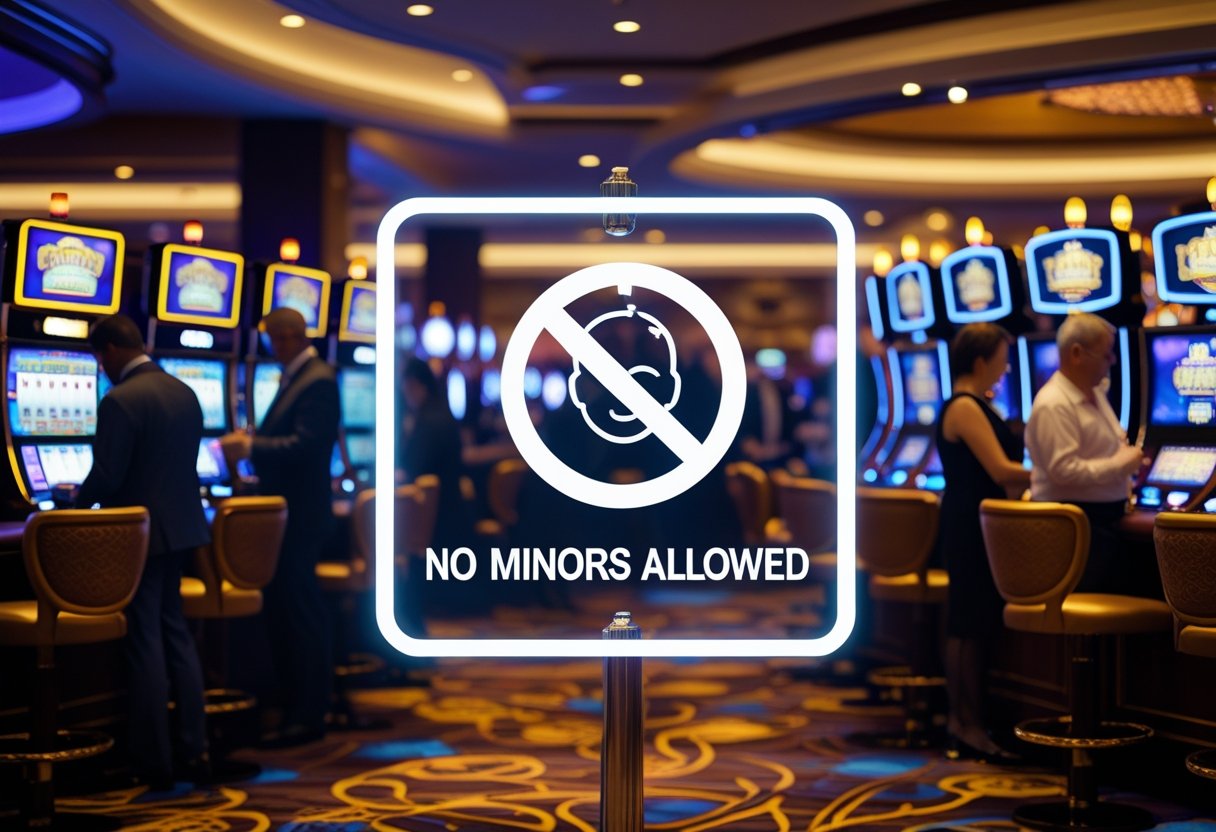
Casino gaming floors have strict legal boundaries that prevent anyone under the minimum gambling age from entering, and these rules apply even when parents are present. The legal gambling age is 21 in most U.S. casinos, though some tribal properties set it at 18.
Direct Transit and Loitering Rules
You can walk through a casino floor with your children, but only if you keep moving without stopping. This means you must stay on designated pathways that connect non-gaming areas like hotel elevators, restaurants, or exits. Your family cannot pause to watch games, stand near slot machines, or linger for any reason.
Casino security monitors these transit routes closely. If you stop walking, even briefly, security will ask you to keep moving or leave the property. Most casinos mark these walkways with different flooring or clear signage to help you identify the acceptable routes.
The distinction between transit and loitering matters significantly. Transit means continuous movement from point A to point B. Loitering includes any pause, observation of gaming activities, or deviation from the direct path. You cannot let your child stand anywhere on the gaming floor, even if they’re just waiting while you retrieve something nearby.
Identification and Enforcement Practices
Casino staff have legal obligations to check IDs and remove underage individuals from gaming areas. Security guards, dealers, and floor supervisors are all trained to spot potential violations. They will approach anyone who appears below the legal gambling age and request identification.
When staff identify a minor on the gaming floor, they must act immediately. You’ll be escorted off the casino floor, and depending on the severity, you might be asked to leave the entire property. The casino faces substantial fines from state gaming boards for each violation, which can reach tens of thousands of dollars.
Casinos use surveillance cameras throughout the gaming floor to monitor compliance. This technology helps staff identify violations quickly and provides documentation if gaming regulators investigate.
Areas Where Kids Are Permitted in Casino Resorts
Casino resorts maintain clear boundaries between gaming and non-gaming spaces. Kids can access hotel rooms, restaurants outside gaming areas, retail shops, theaters, and many entertainment venues within these properties.
Access to Non-Gaming Facilities
You can bring your kids to hotel accommodations at casino resorts without restriction. These rooms function like any standard hotel, and minors have full access to them regardless of the gaming floor below or nearby.
Restaurants located outside the gaming floor welcome families with children. You’ll find these dining establishments in separate areas of the resort, away from slot machines and gaming tables. Many casino resorts also feature food courts and casual dining options that cater specifically to families.
Retail shops within casino resorts are generally open to all ages. Your children can accompany you while shopping for clothing, gifts, or other items sold at these stores. Convention centers and meeting spaces also allow minors, making these resorts viable options for business travelers with families.
Family-Friendly Amenities and Attractions
Theaters and concert halls at casino resorts permit minors to attend age-appropriate shows. You’ll find entertainment options ranging from magic shows to musical performances designed for family audiences. These venues operate completely separate from gambling operations.
Many resorts include pools, arcades, and recreation areas specifically designed for younger guests. Some properties feature water parks, movie theaters, or bowling alleys that provide activities for kids while adults visit other parts of the resort.
Spa facilities may have age restrictions that vary by property. Some allow minors in certain treatment areas, while others limit spa access to adults only. You should verify the specific policies before booking spa services for your family.
State and Casino-Specific Age Requirements
The minimum gambling age varies widely across the United States, with most states requiring casino visitors to be 21 years old while some allow entry at 18. These age requirements can differ between commercial and tribal casinos within the same state, and separate rules often apply for hotel stays and entertainment venues.
Variations in Local Regulations
Most states set their legal gambling age at 21 years old for commercial casinos. This applies to major gambling destinations like Nevada (Las Vegas) and New Jersey (Atlantic City).
However, eight states allow casino gambling at 18: California, Idaho, Kentucky, Michigan, Montana, Oklahoma, South Dakota, and Washington. The rules get more complex in states like California and Michigan, where the minimum age depends on the specific casino you visit.
Tribal casinos often operate under different rules than commercial casinos. These casinos follow agreements between tribal nations and state governments. In California, tribal casinos that serve alcohol require you to be 21, while tribal casinos without alcohol licenses allow 18-year-olds to gamble.
Some states apply different age requirements based on the type of gambling. You might be able to play bingo or buy lottery tickets at 18 but need to wait until 21 for slot machines or table games.
Hotel Check-In and Entertainment Age Limits
Casino hotels maintain their own policies for room reservations that extend beyond gambling age requirements. Most casino hotels require guests to be 21 to check in, even if you don’t plan to gamble. This rule applies regardless of the state’s minimum gambling age.
You can typically attend shows, eat at restaurants, and visit retail shops in casino properties at 18 or even younger when accompanied by a parent. The restriction applies specifically to the gaming floor. Security staff will check IDs and prevent underage individuals from lingering in casino gaming areas, even if they’re just walking through.
Consequences of Underage Violations in Casinos
When minors enter casino gaming floors or participate in gambling activities, both the individuals involved and the establishments face serious legal and financial penalties. State gaming authorities enforce strict age restrictions to protect young people from gambling-related harm.
Penalties for Minors and Parents
Minors caught gambling face immediate removal from casino premises and forfeiture of any winnings. You cannot keep money won through underage gambling, regardless of the amount. Casinos must confiscate these winnings, which often go to state general funds or regulatory agencies.
Parents who bring children to casinos and leave them unattended face severe consequences. Pennsylvania gaming authorities have banned multiple gamblers who left children in parking lots while they played inside. These bans prevent you from entering any casino in the state’s gaming network.
Your legal record may also be affected. Some states classify underage gambling as a misdemeanor offense. Parents can face child endangerment charges if they abandon minors in vehicles or other unsafe areas while gambling.
Impact on Casinos and Their Licenses
Casinos pay substantial fines when they allow underage individuals on gaming floors. Rivers Casino in Portsmouth, Virginia paid $545,000 for violations including allowing minors in gaming areas. This followed a previous $275,000 fine for the same offense.
A Delaware County casino in Pennsylvania faced a $35,000 fine after allowing underage people to gamble. These penalties accumulate quickly, especially for repeat violations. Casinos also risk license suspensions or permanent operating bans in certain states.
Gaming regulators require casinos to implement corrective action plans after violations. These plans must demonstrate improved age verification processes and staff training to maintain compliance with the legal gambling age requirements.
Special Considerations for Families Visiting Casinos
Casino resorts have strict supervision requirements for minors, and most properties do not offer on-site childcare services.
Safety and Supervision Policies
Casinos enforce zero-tolerance policies for unattended minors. You must accompany your children at all times in non-gaming areas, and leaving them unsupervised can result in security intervention or involvement of child protective services.
Most casino resorts require minors to remain with a parent or guardian who is at least 21 years old. Your children cannot wait for you near gaming areas, even in adjacent hallways or walkways. Security staff actively monitor these spaces and will approach any minor who appears unsupervised.
If you need to use the restroom or step away briefly, you must arrange for another adult to supervise your children. Some casinos will ask you to leave the property if they observe repeated violations of supervision policies. The consequences can include being banned from the resort or facing local law enforcement intervention in severe cases.
Childcare Options and Alternatives
Most casino resorts in the United States do not provide on-site childcare or kids’ clubs due to liability concerns. You need to arrange external childcare services before your visit if you plan to spend time on the gaming floor.
Your options include hiring a licensed babysitting service that operates in the area or booking a hotel room babysitter through third-party companies. Some resorts maintain lists of approved childcare providers, though they don’t officially endorse these services.
Another approach involves planning your casino visit during times when one adult can stay with the children while others gamble. Many families rotate gaming time or schedule activities in non-gaming areas like restaurants, pools, or entertainment venues where everyone can participate together.
Frequently Asked Questions
Casino age policies create many questions for families visiting gambling resorts. Most commercial casinos require guests to be 21 years old to access gaming floors, though resorts offer numerous family-friendly areas outside these restricted zones.
Can minors enter and stay in casino resorts with family?
Minors can stay at casino resorts and access most non-gaming facilities. Your children are welcome in hotel rooms, restaurants, retail shops, entertainment venues, and other resort amenities.
The gaming floor itself remains restricted to adults 21 and older. Your family can enjoy swimming pools, theaters, concerts, spas, and restaurants without issue.
What is the legal age to be on a casino gaming floor?
You must be at least 21 years old to enter the gaming floor at most commercial casinos in the United States. This age requirement applies to slot machines, table games, and sports betting areas.
Some states allow 18-year-olds to gamble at certain venues. Tribal casinos in particular may set their minimum age at 18, even when nearby commercial casinos require guests to be 21.
The 21-year age limit matches the legal drinking age since casinos typically serve alcohol throughout gaming areas.
Do any casinos provide child-friendly environments or facilities?
Many casino resorts operate family-friendly facilities completely separate from gambling areas. You can find arcades, swimming pools with water slides, movie theaters, and show venues that welcome all ages.
Some resorts include amusement parks, aquariums, or other attractions designed specifically for children. These entertainment options exist in distinct areas away from the gaming floor.
Your children cannot access or remain in areas where gambling takes place, regardless of supervision.
Are there specific areas within casinos that allow the presence of children?
Children can access hotel lobbies, restaurants, retail stores, and entertainment venues within casino properties. These non-gaming spaces have no age restrictions.
When your family needs to walk through a gaming area to reach another destination, minors must stay with an adult and move directly through without stopping. Your children cannot linger near slot machines or gaming tables.
Casino security enforces these rules strictly. Violations can result in removal from the property and potential fines.
What are the regulations for minors accompanying adults in Atlantic City casinos?
Atlantic City casinos require all gaming floor visitors to be 21 or older. Your children cannot stay on the casino floor even with adult supervision.
Minors may walk through gaming areas only when moving directly to approved destinations like restaurants or hotels. You must accompany your children during these brief passages, and they cannot stop or watch gambling activities.
Atlantic City resorts offer many family-friendly amenities outside the gaming floors. Your children can access boardwalk areas, shops, and certain entertainment venues.
How does Las Vegas accommodate families with children in casino-centric areas?
Las Vegas casino resorts provide extensive non-gaming entertainment for families. You can find circus performances, aquariums, roller coasters, and arcade facilities at various properties on the Strip.
Your children must be 21 to enter gaming floors, but they can access many resort amenities. Hotels, pools, shows, restaurants, and shopping areas welcome guests of all ages.
When you need to walk through a casino with your children to reach your hotel room or another facility, they must stay with you and move directly through the gaming area. Your children cannot stop to watch gambling or remain near gaming equipment.